Healthcare connections shouldn’t end at organizational boundaries.
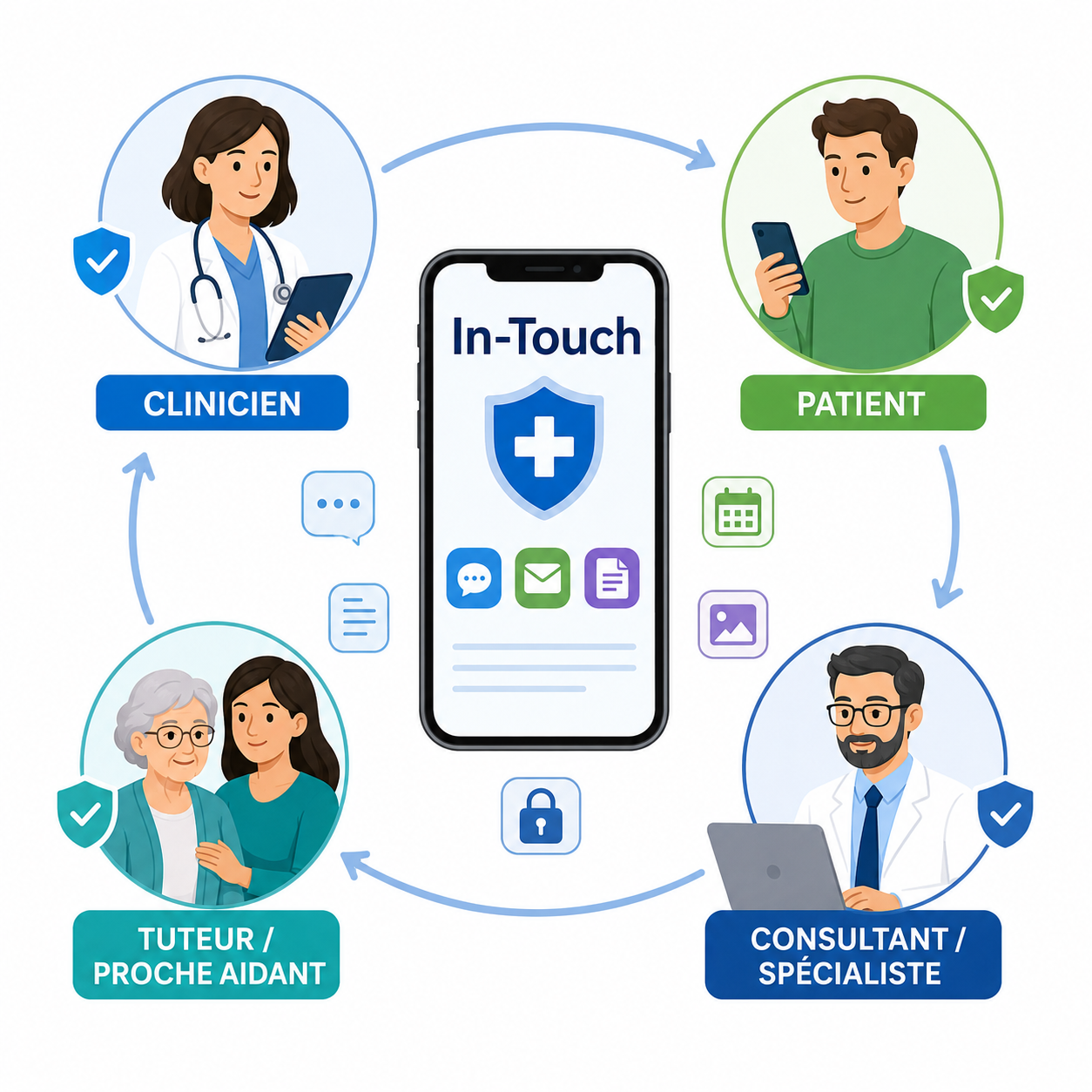
PortableEHR connects patients, healthcare professionals, and independent care organizations through verified identity, patient-controlled authorization, and secure, traceable communication — without replacing existing clinical systems.
Native iOS and Android apps. Issued U.S. patent. Works alongside your existing systems.
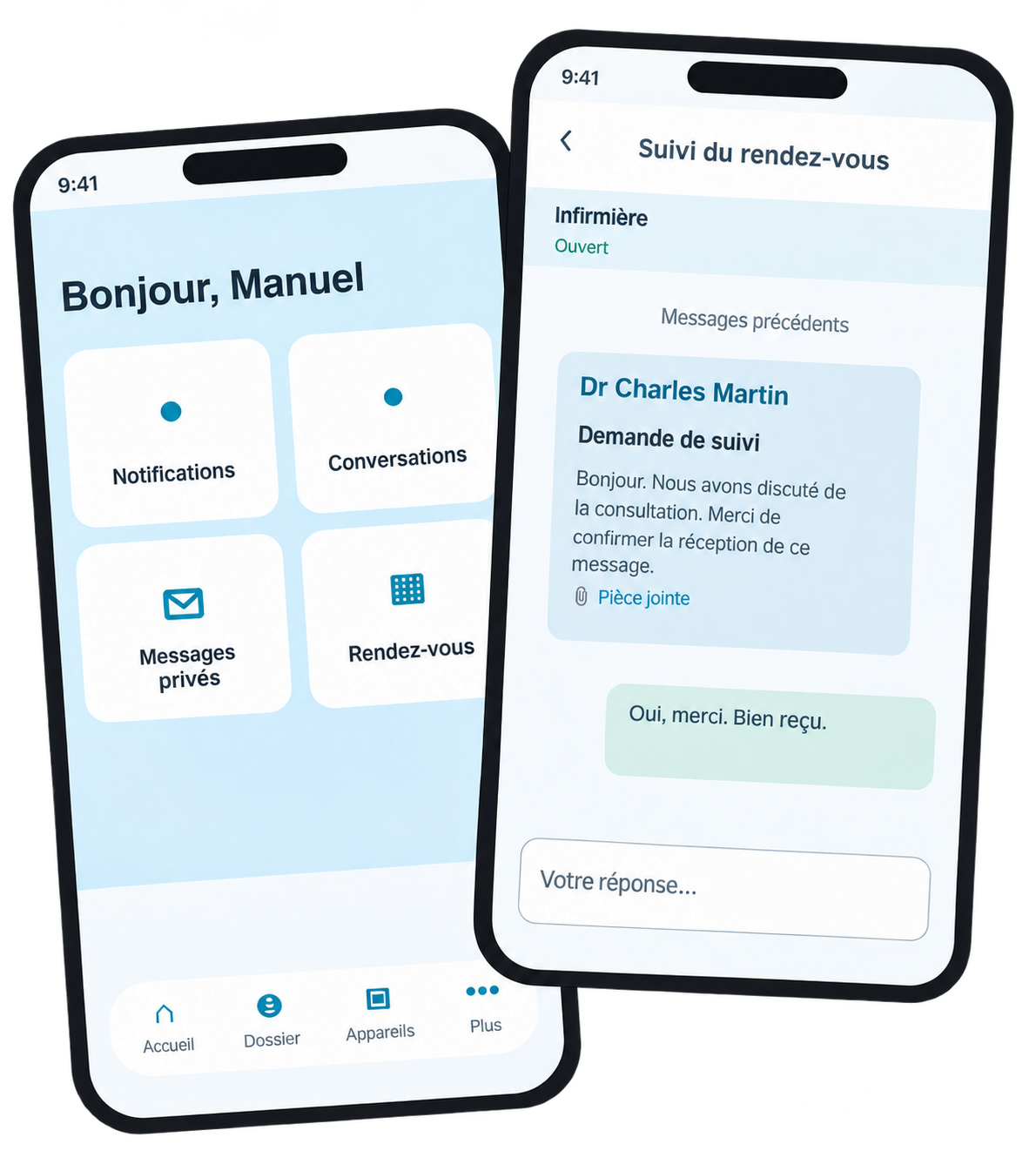
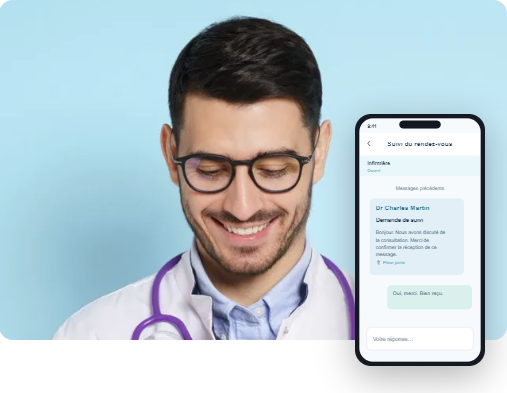
Actual InTouch screens: home view (left) and a secure request-and-reply conversation (right). Select a screen to enlarge.
Exchanging data doesn’t settle who is who, or who may do what.
Data exchange moves information. It does not, by itself, establish who a person is, who may act for them, or how permission and communication continue over time.
Identity and authority
Who is the individual, and who is authorized to participate in their care?
Consent
How can permissions be defined, documented and withdrawn when circumstances change?
Continuity
How can an authenticated relationship continue after an encounter or across organizations?
Care coordination
Clinical requests and information still travel through disconnected channels — including fax, email, and paper — often without clear visibility into receipt, responsibility, or follow-up.
THE PRACTICAL PAYOFF
PortableEHR and InTouch help replace fragmented fax, email, paper documents and repeated phone follow-ups with secure, traceable and accountable exchanges between organizations.
PortableEHR in action
See how patient-controlled trust can support familiar healthcare moments across independent care settings.
When healthcare organizations need to coordinate care
A family physician refers a patient to a specialist at another clinic. Instead of relying on disconnected fax, email, or paper workflows, participating organizations can use InTouch to support secure communication, authorized information exchange, and traceable follow-up. Each organization retains its existing clinical systems while PortableEHR supports trusted interactions across organizational boundaries.
01
Family clinic
Physician initiates a referral or request
02
InTouch secure exchange
Authorized request and information, in a traceable thread
Illustrative flow between participating organizations onboarded to InTouch. Each clinic keeps its own clinical system.
Fewer fragmented channels
Less reliance on fax, email, and paper where InTouch is deployed.
Clearer requests and replies
A defined route for authorized requests, responses, and follow-up.
Patient-linked accountability
Identity, authority, consent, revocation, and auditable interactions.
Works with existing systems
No forced EHR replacement. Efficiency gains are measured in a pilot.
Deployment details
Flows connect participating organizations that have onboarded to InTouch; they do not connect non-participating clinics or arbitrary EHRs. EHR access depends on available integrations and appropriate permissions. Receipt acknowledgment, task assignment, case status, closure and direct EHR data retrieval are pilot-specific or prospective capabilities, confirmed per deployment.
A patient visits a new specialist
A patient can verify their identity and authorize sharing of relevant information with a new specialist, where the required system connections are available.
Workflow conditions
Where system connections are available. Each organization keeps its own records.
A family member joins in care
A patient can nominate a trusted care collaborator and define the permissions for that person’s participation, with the ability to revoke those permissions.
Workflow conditions
Care collaboration is not the same as legal guardianship, and doesn’t carry the same authority.
A physician reconnects with a patient
After a consultation, discharge or treatment abroad, InTouch can support authenticated communication that continues beyond the original encounter.
Workflow conditions
Follow-up happens within the patient’s permissions and applicable rules.
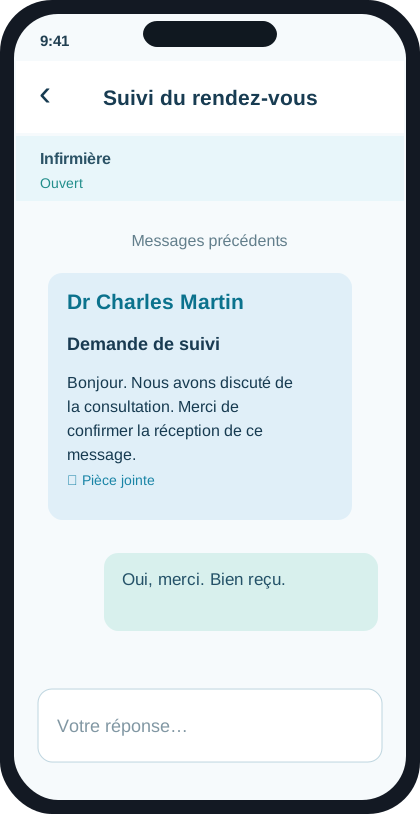
Screen shown: an InTouch follow-up conversation. Select it to enlarge.
A patient-held trust layer, not another record system
PortableEHR is a patient-held trust and communication layer alongside existing healthcare information systems — not another EHR or a central repository for clinical records.
Patients remain the continuity point across care settings: they can authorize participation, maintain appropriate communication, and withdraw permissions as circumstances change.
Verified Identity
Establish a verified link between an individual and their digital identity.
Portable authority
Patient-defined authority can support permitted interactions across organizations.
Revocable consent
Permissions can be defined and withdrawn, subject to the relevant workflow.
Auditable continuity
Support traceable interactions and continued communication under appropriate permissions.
PATIENT-CONTROLLED
One individual
Across care settings
01
Identity
Verify who the individual is
02
Authorization
Set who may access, act, or communicate
03
Controlled Interaction
Exchange information only within granted permissions
04
Audit / Revocation
Review a traceable activity history and withdraw permission where supported
Participating hospital
Participating clinic
Participating specialist
Each organization retains its own clinical records. PortableEHR complements existing systems.
The patient-centered trust layer supports authorized interactions across independent healthcare organizations.
Connect care teams. Coordinate across organizations. Keep patients in control.
Improve secure clinical communication, patient-authorized information exchange, and continuity of care across independent healthcare organizations — without replacing their existing systems.
Pilots are scoped jointly around an agreed workflow and measurable success criteria.
Pilot terms
Integration requirements are defined per pilot. Participating organizations must onboard to InTouch. Operational benefits are hypotheses until quantified in a pilot; no cost savings are guaranteed.