Build secure, consent-based client engagement into your existing systems.
Portable EHR provides the identity, consent, authorization and communication layer that allows existing systems to interact with authenticated users without becoming a centralized clinical data repository.
Why developers integrate with Portable EHR
Portable EHR reduces the need for deep point-to-point integration by placing the authenticated individual at the center of access, consent and communication workflows. Instead of requiring every system to directly integrate with every other system, Portable EHR provides a consent-based routing layer that allows existing systems to interact through a governed, auditable and user-authorized architecture.
Lightweight integration
No need to replace existing EMRs, LIS, pharmacy systems, research platforms or existing client-facing applications.
Consent and authorization built in
Access is governed by verified identity, user authority, consent, delegation, revocation and auditability.
Multiple integration paths
Start with no-code configuration, use hosted feed components, integrate through REST APIs, or embed functionality using SDKs.
How Portable EHR fits into your existing architecture
1. Source systems / Feeds
Where the data or workflow originates: EMRs, LIS, pharmacy systems, hospital portals, research platforms or custom applications.
2. Portable EHR Router
The trust layer provided by Portable EHR. It manages identity, access rules, consent, delegation, notifications and auditability.
3. User-facing mobile application or SDK
The authenticated user interface, either through the Portable EHR app, a white-label version, or functionality embedded into the client’s own application.
The Portable EHR Router is the trust layer we provide. Around it, partners can choose the level of integration that fits their environment: no-code configuration, hosted feed components, API-based integration, SDK-based mobile integration, or fully customized deployment.
Information remains in the Feeds or source systems. Portable EHR can provide this layer through its InTouch portal, integrate it into your own systems, or allow you to implement it directly in your own code using RESTful APIs.
Integrate your system as a Feed
To fully benefit from Portable EHR, your system can be integrated as a Feed. This usually requires your system to consume a Portable EHR API and implement a webhook so events can be exchanged securely. You may build this integration yourself or use one of our SDKs.
For a first deployment or demonstration, Portable EHR can be used without deep integration into existing systems. This no-code option allows partners to validate the user experience, workflows and use cases before moving to a deeper integration.
Mobile applications
For the mobile application, partners have three options.
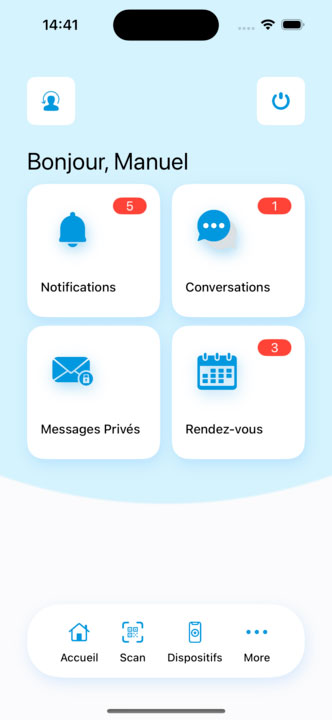
Use the Portable EHR mobile application
Offer the Portable EHR mobile app directly to your patients, clients or users.
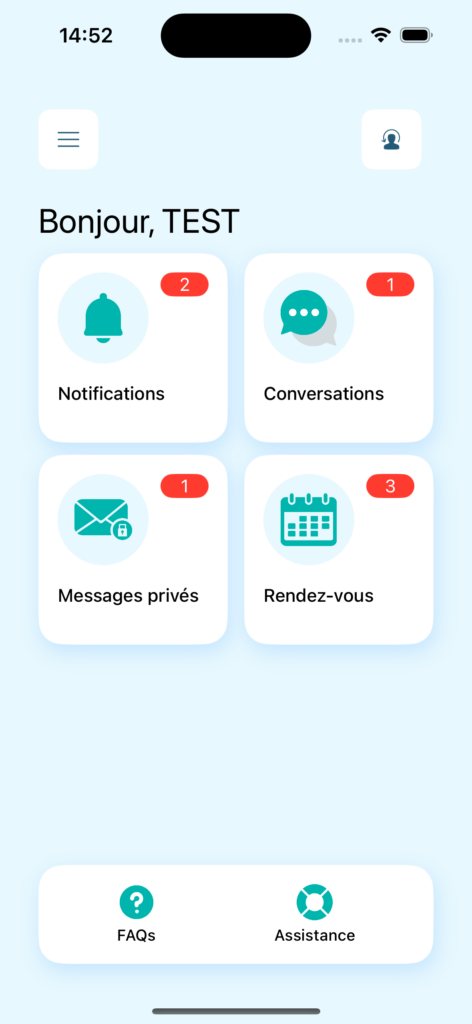
Use a white-label version of the application
Customize the application with your own brand. Contact us to assess feasibility, timeline and cost.
Embed Portable EHR functionality into your own mobile application
Integrate identity, consent, access and communication features directly into your own application using our mobile SDKs.
Explore the technology with a minimal configuration and see how Portable EHR works in practice.
Schedule a demonstration to see the Portable EHR mobile application, InTouch portal and consent-based workflows in action. We can also review your technical environment and possible integration path.
If you wish to continue, we can provide access to a partner development environment so your team can test the integration freely.